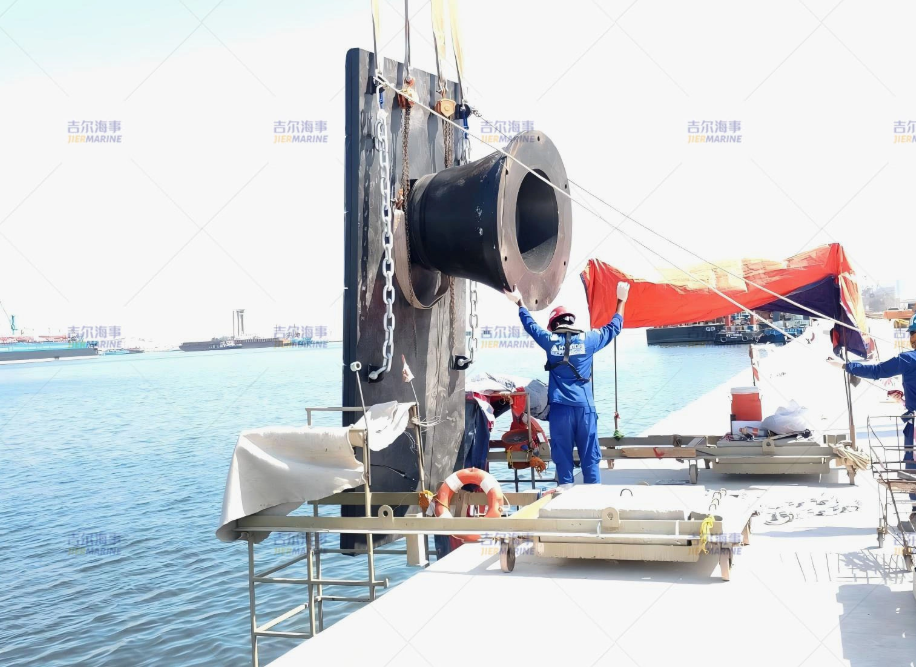

Regular Maintenance of Rubber Fender System
InquireCompared to traditional rubber fenders, fender systems equipped with a front frame, UHMW-PE pad, and chain assembly are structurally more complex and operate under higher stress and corrosive conditions. Therefore, regular inspection and maintenance are essential to ensure system integrity and prolong service life.
Inspection Schedule:
Inspections should be conducted after the first three vessel berthings following installation, and subsequently on a monthly basis.
Key Inspection Points:
Fasteners: Check the bolts securing the fender base and front panel for looseness. If loose, tighten them and secure the nuts and washers (e.g., by tack welding) to prevent future loosening.
Fender Body: Inspect the rubber fender body for damage or cracks. Any serious defects found must be repaired or the unit replaced immediately.
Front Frame: Examine the front frame for subsidence, cracking, or corrosion. Address these issues immediately. To prevent rusting of the front panel, anti-corrosion treatment (e.g., painting) should be applied annually.
Alignment: Ensure the front frame has not tilted forward, particularly in open-type systems. Accumulated debris or silt on the inner side can cause the front panel to lean forward, negatively affecting the contact pressure and friction performance of the fender face.
UHMW-PE Pad: Check the surface of the UHMW-PE pad for scratches or damage. Replace the pad immediately if cracks are detected.
Concrete Base: Inspect the concrete foundation to which the rubber fender system is mounted for any signs of cracking.
Chains & Components: Check all chain components for rust and cracks. Inspect rubber components for signs of degradation or abnormal elasticity. Any compromised parts must be treated or replaced immediately.