
Quick Release Hook (QRH) Inspection Guide for Safe Mooring Operations
InquireQuick Release Hooks (QRHs) are critical safety devices in modern port mooring systems. Their performance directly influences berthing safety, operational efficiency, and emergency response capability. Whether used on LNG terminals, oil and gas jetties, bulk berths, or container terminals, ensuring the reliability of QRHs through proper inspection is essential for safe marine operations.
This guide summarizes key inspection stages, acceptance criteria, and common issues to support port operators, EPC contractors, and equipment suppliers in maintaining high mooring safety standards.
Why QRH Inspection Is Essential
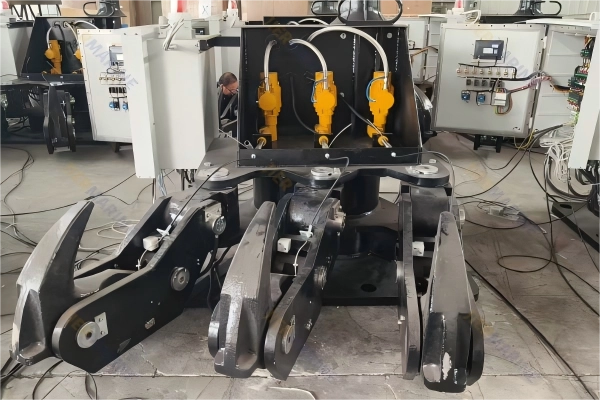
QRHs experience high tension loads and operate in corrosive marine environments. Without systematic inspection, risks may include:
· Mooring line breakage due to excessive tension
· Hook arm deformation or mechanical linkage failure
· Incorrect load readings from faulty sensors
· Electric or manual release failure during emergencies
· Explosion-proof component defects in hazardous zones
· Premature corrosion from inadequate coating
A rigorous inspection program eliminates these risks and ensures long-term operational reliability.
Three Major Inspection Stages: FAT, PSI & SAT
1. FAT – Factory Acceptance Test
Performed before shipment to verify:
· Structural and dimensional accuracy
· Mechanical performance of manual and electric release
· Static and overload testing
· Sensor calibration and communication stability
· Electrical and explosion-proof conformity
2. PSI – Pre-Shipment Inspection
Conducted once production is completed:
· Visual and coating inspection
· Verification of accessories, tools, and spare parts
· Packaging, labels, and documentation completeness
· Compliance with drawings and purchase order
3. SAT – Site Acceptance Test
Executed after installation at the port:
· Onsite functional testing of every hook
· Central control system integration and communication checks
· Manual, electric, and emergency release tests
· Real-load validation and group release tests
Together, FAT + PSI + SAT ensure consistent performance from manufacturing to final operation.
Key Items in QRH Inspection
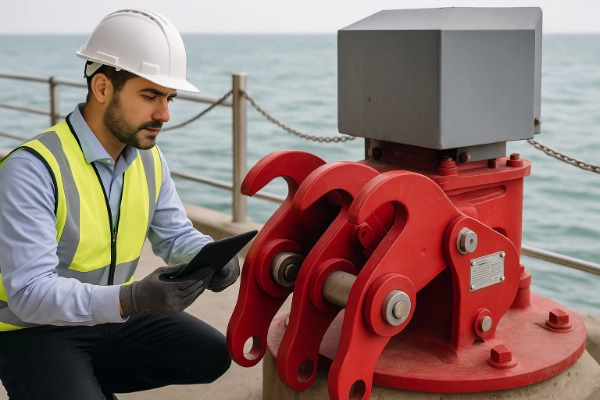
1. Structural & Visual Inspection
Inspectors should check:
· Dimensions vs. approved drawings
· Hook arm, base frame, and linkage assembly quality
· Welds and surface finishing
· Corrosion protection and coating thickness
· Pin, shaft, and bearing lubrication and tightening
· Nameplate accuracy and serial number traceability
A strong structural foundation ensures long-term durability.
2. Load & Performance Testing
Typical testing requirements:
· Static load test: 1.1 × SWL, held for 10 minutes
· Overload test: up to 1.5 × SWL
· Electric release: ≤ 2 seconds
· Manual release: smooth and reliable
· Group release: synchronized operation across multiple hooks
These tests verify that the system performs safely under extreme conditions.
3. Electrical & Explosion-Proof Inspection
QRHs often operate in hazardous areas, so compliance with international standards is critical:
· IEC 60079 / ATEX / GB 3836 certification
· Explosion-proof markings (e.g., Ex d IIB T4 Gb)
· Electrical insulation ≥ 5 MΩ
· IP66–IP67 protection for outdoor conditions
· Correct wiring, grounding, and gland sealing
· Functional logic of emergency stop circuits
Electrical failures are a major risk factor—making this inspection stage essential.
4. Load Monitoring System Inspection
A load monitoring system typically includes:
· Strain-type or compression load cell
· Local digital display
· RS485 / Modbus communication
· Calibration certificates
· Accuracy within ±1% FS
· Stable readings with no drift
Reliable load monitoring prevents dangerous over-tension conditions.
5. Software & Control System Verification
For integrated QRH monitoring systems:
· Real-time load display and trend curves
· Alarm logic for overload or communication loss
· Individual and group release functions
· Data logging and historical record export
· Modbus RTU/TCP or Ethernet communication stability
· Fail-safe and redundancy design
Software stability is a key requirement in smart port operations.
Common Issues Discovered During Inspection
Experience shows frequent problems such as:
· Coating thickness below marine standards
· Inaccurate or unstable load cell readings
· Mismatched explosion-proof certification
· Electrical grounding or shielding issues
· Stiff or blocked manual release handles
· Software not synchronizing load data
· Emergency release failure
Identifying issues early prevents operational downtime and safety incidents.
Building a Standard QRH Inspection Workflow
A complete workflow should include:
· Inspection & Test Plan (ITP)
· QC document package: MTC, calibration reports, EX certificates, wiring diagrams
· Structured inspection checklist
· FAT + SAT dual verification
· Photographic records and traceable documentation
A standardized approach improves transparency and ensures long-term reliability.
Conclusion
QRH inspection is vital for safe and efficient mooring operations. By enforcing strict mechanical, electrical, explosion-proof, and software inspection standards, ports can ensure:
· Safe berthing and unberthing
· Accurate load monitoring
· Reliable release under normal and emergency conditions
· Compliance with international regulations
· Extended equipment service life
As ports move toward automation and digitalization, robust QRH inspection practices will remain a core requirement for safety and operational excellence. If you have any question please contact us.