

Foam Filled Fenders: Structural Principles And Engineering Applications
Inquire1. Why Foam Filled Fenders Are Gaining Wider Acceptance
In modern ports, terminals, and offshore facilities, fender systems play a critical role in absorbing berthing energy and protecting both vessels and infrastructure. As vessel sizes increase and operating conditions become more complex, conventional rubber fenders or pneumatic fenders may not always provide the desired balance between energy absorption, operational reliability, and long-term maintenance requirements.
Foam filled fenders have emerged as a practical alternative in many engineering projects. Their growing adoption is driven by several inherent advantages, including stable energy absorption, inherent buoyancy, and independence from internal air pressure, making them particularly suitable for demanding and long-term marine applications.
2. Basic Construction of a Foam Filled Fender
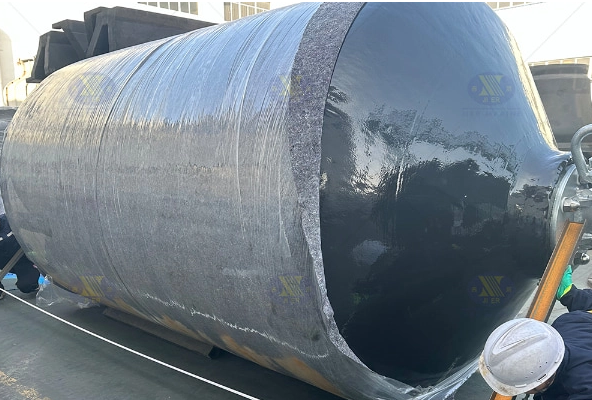
From an engineering perspective, a foam filled fender is typically composed of three functional layers. Each layer contributes to the overall mechanical performance and service life of the system.
2.1 Closed-Cell Foam Core
At the center of the fender is a high-density closed-cell foam core. This core is designed to:
· Prevent water ingress due to its independent cell structure
· Maintain elastic recovery after compression
· Retain buoyancy even if the outer skin is damaged
Because the foam does not rely on air pressure, the fender remains functional even under partial surface damage, significantly reducing the risk of sudden failure.
2.2 Elastic Outer Skin
Surrounding the foam core is a high-strength elastomeric skin, commonly based on reinforced polyurethane or polyurea systems. This layer serves several essential functions:
· Protects the foam core from mechanical damage
· Resists abrasion from repeated vessel contact
· Provides high tear resistance under cyclic loading
The mechanical properties of this outer skin largely determine the durability and fatigue resistance of the fender.
2.3 Protective Surface Coating
A specialized protective coating is often applied to the external surface of the elastomer layer. Its primary purposes include:
· Enhancing resistance to ultraviolet radiation
· Improving chemical and seawater resistance
· Maintaining surface integrity and color stability
For fenders exposed to harsh marine environments, this coating plays a crucial role in extending operational life.
3. Energy Absorption Mechanism
During vessel berthing or relative motion, a foam filled fender absorbs kinetic energy through the controlled compression of the foam core. Unlike pneumatic fenders, this process does not depend on gas compression, but instead relies on the material deformation characteristics of the foam.
This mechanism offers two key engineering benefits:
· A more gradual and predictable increase in reaction force
· Stable performance regardless of ambient temperature or pressure variations
As a result, foam filled fenders are well suited for applications where consistent behavior under variable conditions is required.
4. Key Performance Advantages
4.1 Inherent and Reliable Buoyancy
Thanks to the closed-cell foam structure, foam filled fenders remain afloat even in the event of external skin damage. This characteristic significantly enhances operational safety and reliability.
4.2 Reduced Maintenance Requirements
Foam filled fenders do not require air pressure monitoring, inflation, or deflation procedures. This makes them especially suitable for:
· Remote or unattended installations
· Offshore platforms
· Long-term mooring systems
Lower maintenance demand translates directly into reduced lifecycle costs.
4.3 Environmental Adaptability
Foam filled fenders maintain stable mechanical properties across a wide range of temperatures and environmental conditions. Their resistance to UV exposure, saltwater, and weathering allows them to perform reliably in diverse marine environments.
5. Typical Applications
Foam filled fenders are widely used in various marine and offshore applications, including:
· Port and terminal berthing facilities
· Ship-to-ship (STS) transfer operations
· Offshore platforms and floating structures
· Barges, workboats, and service vessels
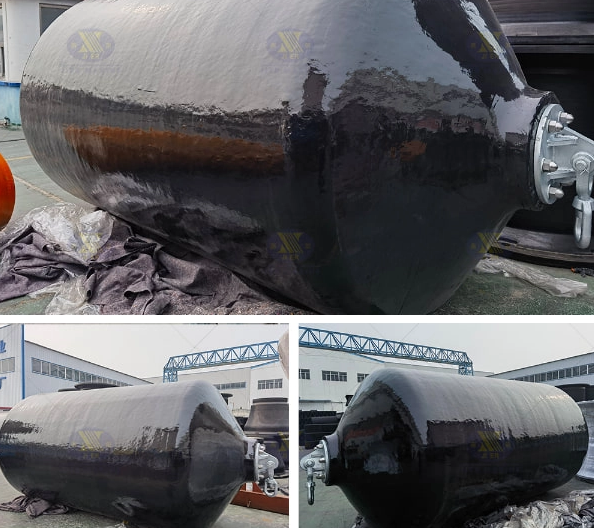
Their dimensions, geometry, and surface properties can be tailored to meet specific project requirements.
6. Engineering Considerations for Fender Selection
When selecting a foam filled fender for a particular project, several technical factors should be evaluated:
· Required berthing energy absorption
· Maximum allowable reaction force
· Appropriate diameter and length configuration
· Thickness and durability of the outer skin
· Color coding or surface marking requirements
Proper selection ensures optimal performance while minimizing long-term operational risks.
7. Conclusion
Through a combination of closed-cell foam cores, durable elastomer skins, and protective surface coatings, foam filled fenders provide a balanced solution for energy absorption, reliability, and ease of maintenance. They have become an important option in modern port and offshore engineering, particularly where operational stability and long service life are essential.
Careful engineering design and application-specific selection are key to fully realizing the advantages of foam filled fender systems.